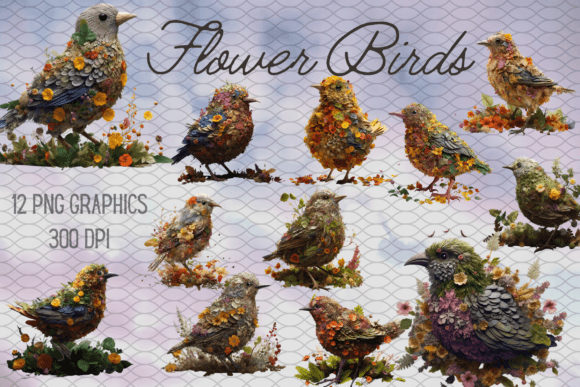
Enchanting Painted Flower Birds Illustrations
A Whimsical Fusion of Nature and Art
There’s a quiet magic that happens when botanical art meets avian elegance. Painted Flower Birds Illustrations captures this perfectly, offering a collection that feels both timeless and refreshingly original. These aren’t just drawings of birds and flowers; they are intricate narratives where every petal and feather tells a story of coexistence. The style leans into a delicate, almost ethereal aesthetic, with soft watercolor washes meeting precise, detailed linework. You’ll notice how the plumage of a hummingbird seamlessly transitions into the curl of a vine, or how a sparrow’s breast is adorned with tiny, perfect blossoms. This visual personality is one of sophisticated whimsy—playful enough to feel joyful, yet refined enough for professional applications.
The overall appeal lies in its versatility and emotional resonance. For a designer, it’s a premium font asset that provides instant character. The illustrations carry a handmade quality that digital tools often struggle to replicate, lending an authentic, crafted feel to any project. Whether you’re building a brand identity for a boutique florist, crafting social media graphics for a wellness blog, or designing packaging for artisanal goods, these illustrations inject personality without overwhelming the core message. They speak to an audience that values beauty, detail, and a connection to the natural world.
Practical Applications Across Creative Projects
Understanding where Painted Flower Birds Illustrations excels is key to leveraging its full potential. This isn’t a one-trick asset. In editorial design, these illustrations can transform a magazine feature on gardening or mindfulness into a visual masterpiece, serving as captivating spot illustrations or full-page spreads. For web design, they make stunning hero images, background textures, or decorative elements for a site’s sidebar, instantly elevating the user experience with organic charm.
The collection’s strength also shines in tangible, personal projects. Think beyond the screen:
- Wall Art & Prints: Frame individual illustrations or create curated gallery walls for nurseries, living rooms, or creative studio spaces.
- Stationery & Cards: Design unique wedding invitations, thank-you notes, or birth announcements that feel genuinely personal and memorable.
- Scrapbooking & Planners: Add beautiful, thematic embellishments to memory-keeping pages or use them to decorate weekly planner spreads, making organization a delight.
- Blog Banners & Digital Products: Create eye-catching headers for articles on floral arrangements, birdwatching, or creative writing, enhancing reader engagement.
For entrepreneurs and small business owners, these illustrations offer a way to differentiate. Use them on product labels for homemade candles or soaps, as motifs on fabric for small-batch textiles, or as the centerpiece of a logo design for a brand rooted in nature, creativity, or care. The commercial potential is vast, provided you understand the licensing—more on that shortly.
Integrating Illustrations into Your Design Workflow
Adopting a new design asset like this requires a thoughtful approach. First, evaluate the project fit. Ask yourself: does the tone of these illustrations align with my brand’s voice or my client’s vision? Their gentle, artistic nature suits brands that are approachable, creative, and detail-oriented. They might not be the right match for a tech startup seeking ultra-modern minimalism, but they could be perfect for a café, a bookstore, or a coaching practice.
Next, consider font pairing. The ornate, flowing lines of the illustrations demand typefaces that complement, not compete. A clean, simple sans serif font often works beautifully for body text, providing a modern counterbalance. For headlines, a subtle serif font or an elegant script font can echo the illustrative style without causing visual clutter. Avoid overly decorative or handwritten fonts that might clash. The goal is hierarchy and readability; the illustration should be the star, supported by typography that guides the eye.
Always test your pairings in context. Place the illustration next to your chosen typeface at actual size. Does the text remain legible? Does the overall layout feel balanced? Review the included styles within the illustration pack—perhaps there are variations with more or fewer floral elements, or different bird poses. Choose the one that best fits your layout’s spatial needs.
Finally, a note on professionalism and licensing. If you’re using these for a client project or a commercial product, ensure you have the correct commercial font or asset license. This protects you, your client, and the original artist. A clear license allows you to use the work confidently in print runs, digital products, and merchandise, forming a legitimate part of your brand identity toolkit.
The Subtle Power of Thoughtful Imagery
In a digital landscape saturated with generic stock photos and algorithm-generated art, hand-painted illustrations like these carry a distinct weight. They influence perception at a subconscious level. A customer seeing a product adorned with Painted Flower Birds Illustrations perceives more care, more artistry, and more story behind the brand. This isn’t just decoration; it’s a strategic tool for building recognition and emotional connection.
For content creators and bloggers, these visuals can significantly boost engagement. A beautifully illustrated blog header or social media post stops the scroll. It communicates that the content within is equally curated and valuable. It transforms a simple update into a piece of shareable art, increasing the likelihood of saves and shares—key metrics in today’s algorithms.
Ultimately, working with assets like Painted Flower Birds Illustrations is about making intentional choices. It’s selecting imagery that resonates with your audience’s values and elevates your message. Whether you’re a crafter adding a personal touch to a gift, a marketer building a campaign for a floral subscription service, or a designer crafting a timeless brand identity, these illustrations provide a versatile, beautiful foundation. They remind us that in design, as in nature, the most captivating elements often arise from a harmonious blend of the detailed and the delicate.